
Home » Compressed air dryers » Refrigerated Air Dryers

Industrial air treatment
Remove moisture from industrial compressed air. Compare dryer series by airflow, pressure and inlet temperature, then get help matching a model to your system.
Understanding refrigerated drying
A refrigerated air dryer removes moisture from compressed air by cooling it until water vapor condenses. It then separates and drains the liquid water before the air returns to the system.
This helps reduce moisture reaching pipework, pneumatic tools and equipment. Refrigerated drying suits applications with above-freezing pressure dew point requirements. Filters are still needed for the particles and oil aerosols your process requires you to control.
Product range
Choose shell-and-tube or compact plate-fin construction, with a higher-inlet-temperature option for hotter incoming air. Each series uses air cooling as standard.
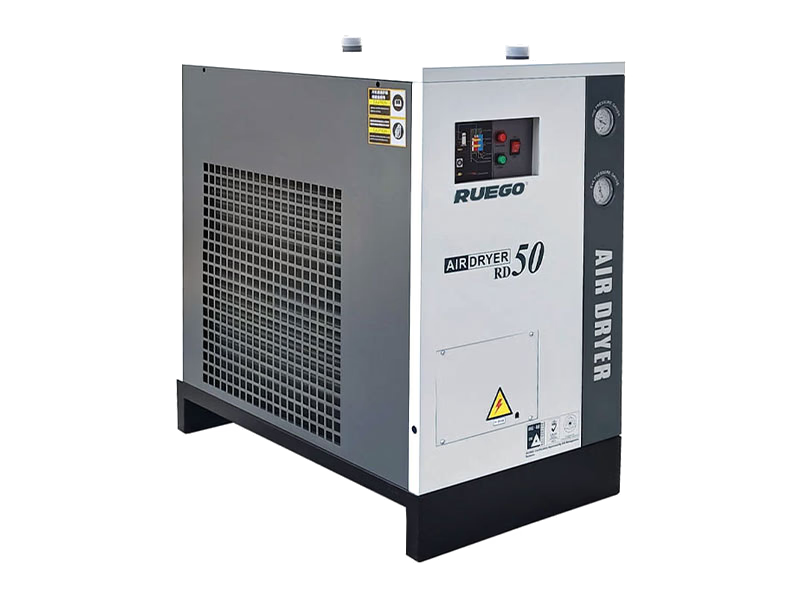
Airflow
1-65 Nm³/min
Pressure
6-10 bar
Pressure dew point
2–10°C
Inlet temperature
≤60°C
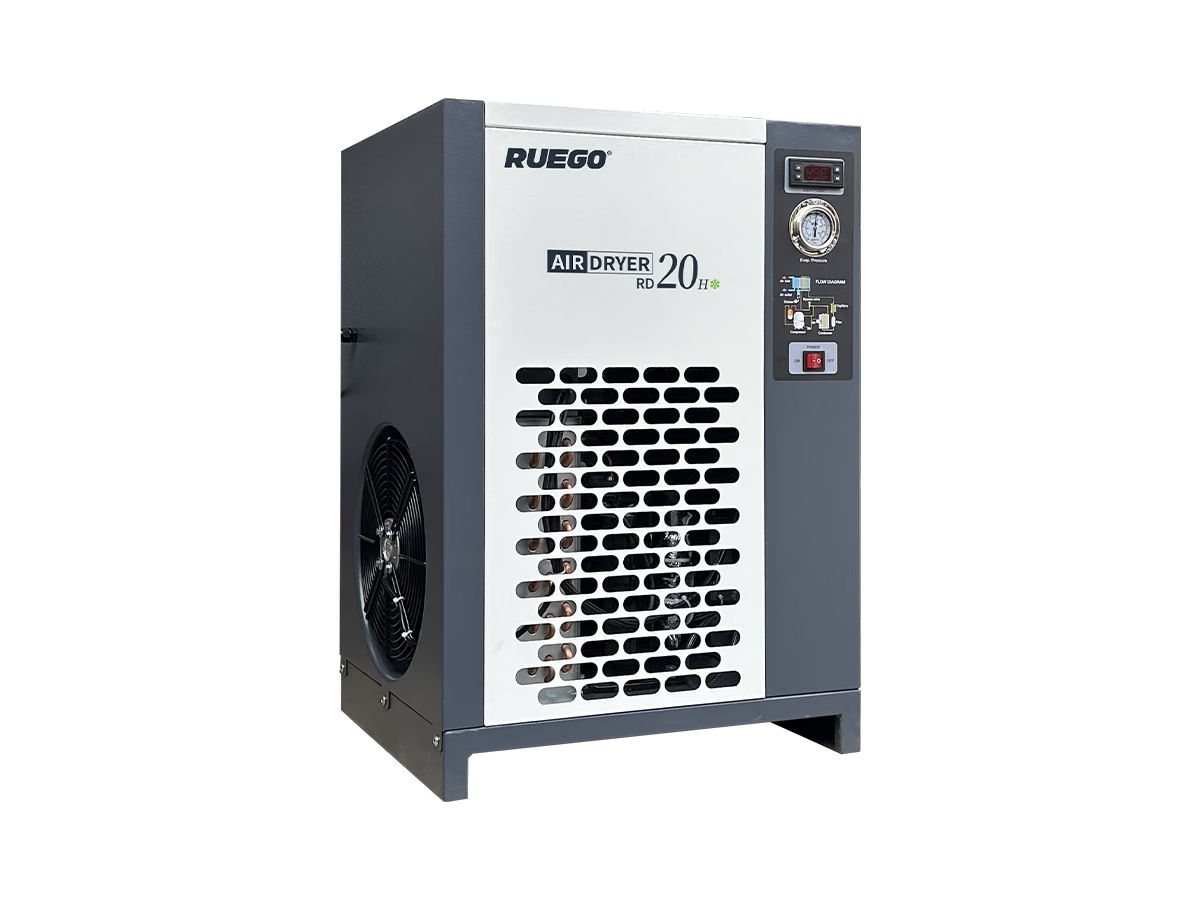
Airflow
0.6–150 m³/min
Pressure
Min. 6 / Max. 16 bar
Pressure dew point
2–10°C
Inlet temperature
Norm. ≤42°C / Max. 70°C
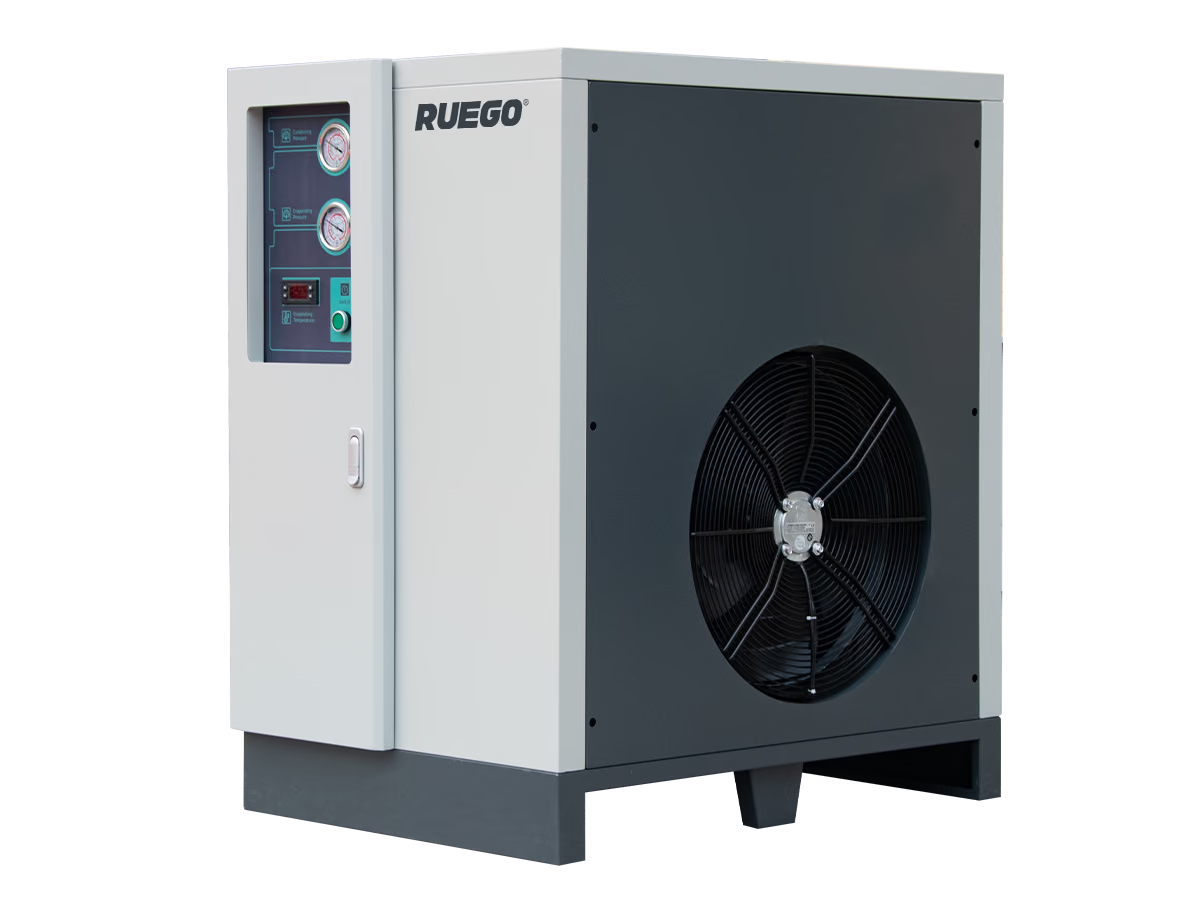
Airflow
1–45 m³/min
Pressure
7–16 bar, model dependent
Pressure dew point
2–10°C
Inlet temperature
≤50°C
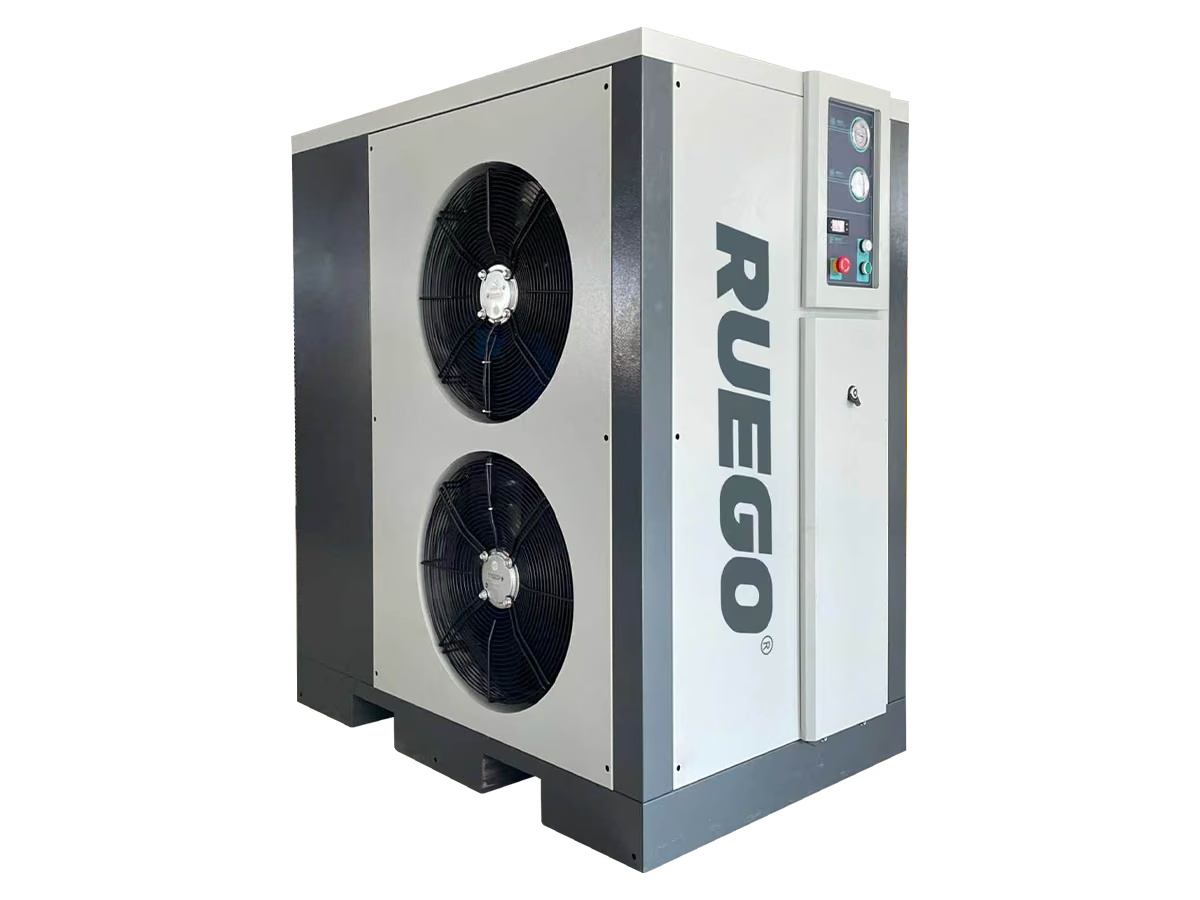
Airflow
1.2–100 m³/min
Pressure
7–13 bar
Pressure dew point
2–10°C
Inlet temperature
≤65°C
Capacity depends on operating conditions. Share the flow unit and its reference conditions so we can match the dryer to your compressor.
Compare the essentials
Start with construction and operating limits. Final model selection also depends on peak airflow and the pressure dew point your process needs.
DS-V: DS010V–DS135V and DS250V operate at 7–16 bar. DS185V, DS205V, DS350V and DS450V operate at 7–13 bar.
Airflow units are shown as specified for each series. Confirm reference conditions before comparing capacities. Maximum temperature, maximum pressure and listed airflow are not a combined performance guarantee.
Match your conditions
Start with the air your system actually uses. Compressor motor power alone does not tell you how much drying capacity you need.
Send Your Operating Conditions →01
Provide peak airflow, its unit and reference conditions, plus the lowest and highest operating pressures. Include all compressors that may run together.
02
Check the hottest air entering the dryer and the highest room temperature. DS-VH accepts inlet air up to 65°C, while its ambient limit remains 38°C. RD-H has a normal inlet limit of 42°C and a 70°C limit condition. Capacity must be confirmed for the actual conditions.
03
Specify the required pressure dew point, voltage, frequency, phase and connection standard. Allow space for cooling airflow, drainage and maintenance. For a compact installation, compare RD-H and DS-V model dimensions.
Cooling, separation, drainage
Incoming compressed air is pre-cooled by the cold air leaving the dryer. It then passes through the evaporator, where further cooling turns water vapor into liquid. A separator collects the water, and an automatic drain removes it.
Before leaving, the dried air absorbs heat from the incoming air. This heat exchange warms the outlet air and reduces the load on the cooling system.
For a lower pressure dew point, discuss desiccant drying requirements with our team.
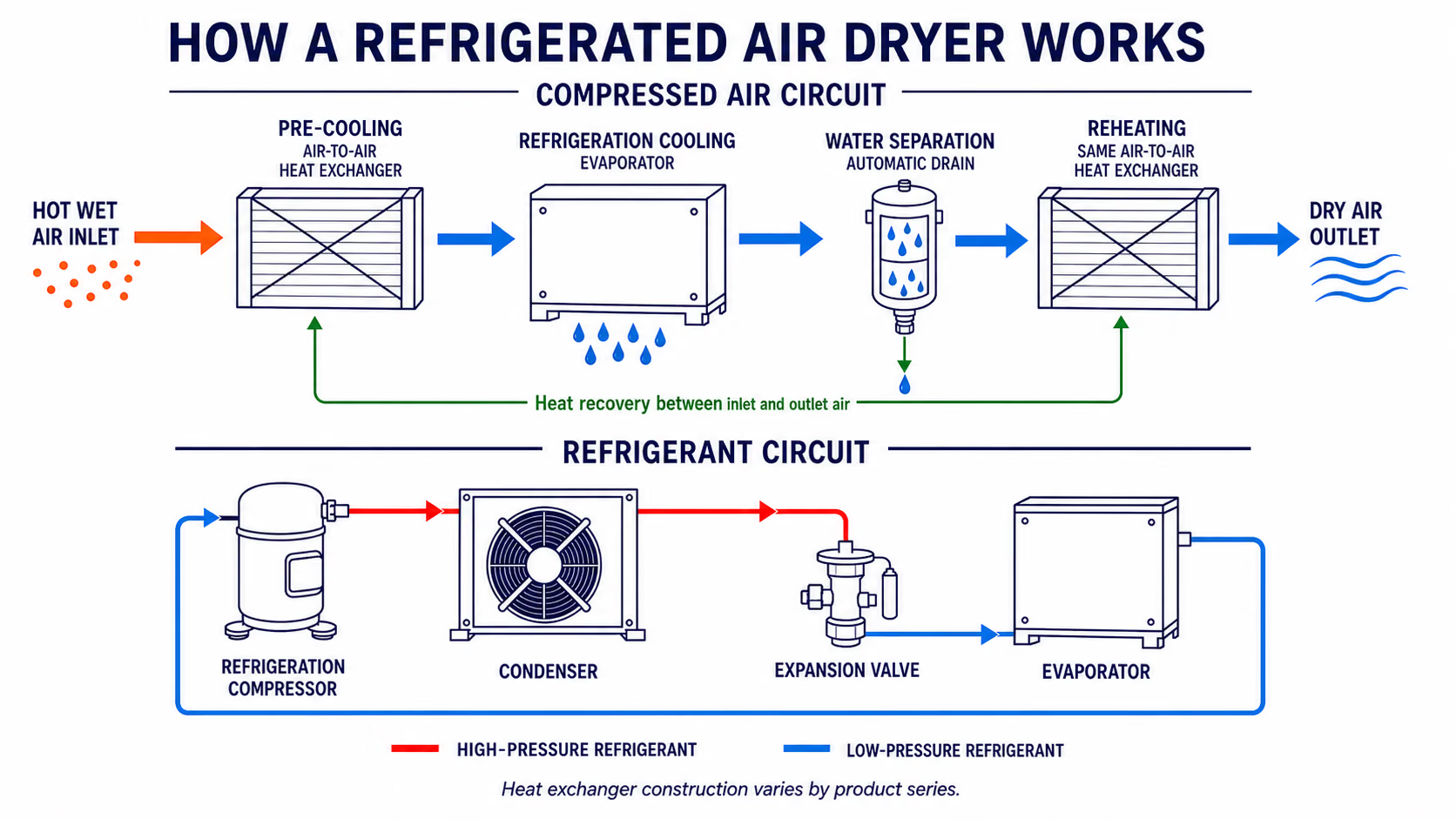
Compressed air and refrigerant flow. View larger diagram
Complete the air treatment system
The dryer removes moisture. Filters control particles and oil aerosols. Select both around the air quality your equipment or process requires.
01
Supplies compressed air
02
Buffers demand; drains collected water
03
Reduces liquid, oil aerosol and particle load
04
Cools, separates and drains moisture
05
Two downstream filters selected for the required air quality
06
Delivers air to equipment
Typical arrangement; drainage, filter grades and equipment order must suit the project. Adding filters does not replace a dryer when a lower pressure dew point is needed.
Support everyday factory air, from a single machine to a central air station. Product-contact and high-cleanliness processes need a separate air-quality assessment.
Reduce moisture reaching pneumatic tools, fixtures and valves.
Supply cylinders and valve islands with dried, filtered air.
Match routine air needs; assess product-contact air separately.
Control moisture alongside the required oil and particle filtration.
Check combined peak flow, pressure losses and maintenance access.
OEM and project supply
RUEGO supplies refrigerated air dryers for industrial projects, distributors and OEM buyers. Share your operating conditions and destination market so we can confirm the series and order configuration.
Price depends on dryer capacity, operating conditions, electrical requirements and customization. Send your requirements for a model-specific quotation.
Discuss Your ProjectBranding
Color, logo and nameplate
Electrical supply
Voltage, frequency and phase
Connections
Size, type and applicable standard
Delivery materials
Manuals and packaging
Selection and quotation
Tell us what you need to dry and the operating conditions you know. We will help you narrow the series and identify the information needed for a quotation.
Before you choose
Practical answers before you choose a dryer series or share your operating conditions.
Tell us which products you are considering and how you plan to use them. Share any requirements you already know.
Refrigerated air dryer selection
Share what you know. You do not need a complete specification to start.
Share what you know. If you’re unsure about pressure or airflow, tell us what equipment you use and we’ll help with selection.
Only name and email are required.